Oculus Quest
Follow the "New Project" instructions from the Quest website
Follow the instructions from the quest website to set up your project
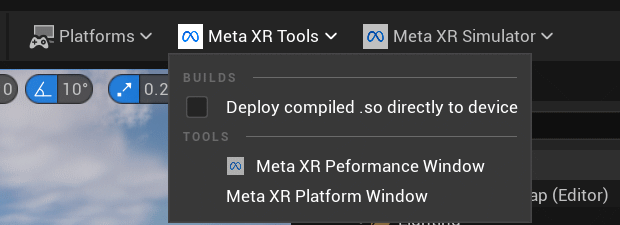
Remember to disable Support OpenGL ES3.2 under Android ->Build. Quest projects will not work with that option ticked. Make sure to run the test under "Meta XR Performance Window" and select Mobile as your target platform. Also Remember to package the project for oculus using the "Package for Meta Quest devices" option.
Ensure that your project is compatible with the Android guidelines
Follow the instructions from the unreal android guidelines to get setup up your project
Download and extract Meta Unreal Plugins into the Plugins folder
Download Meta's plugin from meta unreal plugin. Extract the plugin into the project "Plugins" folder and restart the Unreal editor.
Try to use "Meta XR Performance Window" to set the project with the recommended settings
It is recommended to use "Meta XR Performance Window" and follow their suggestions.
Remember to check the "Package for Meta Quest Devices" option.
When you package your quest device do not forget to tick the "Package for Meta Quest Devices".
Under "Android" -> "Advanced APK Packaging" -> "Package for Meta Quest Devices"
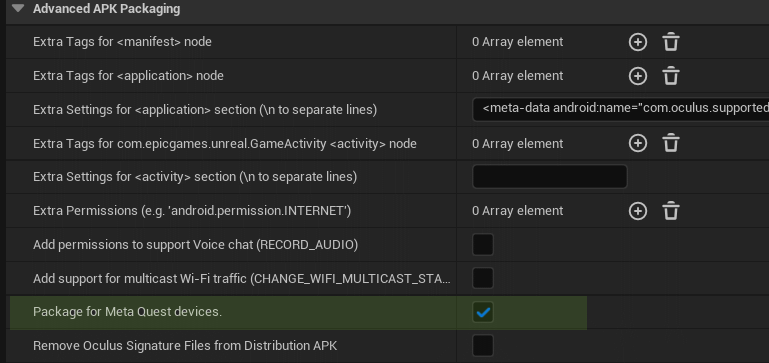
If you see that your project opens as a "window" application inside the quest,
it is a good indication that you forgot to check this box.
Try to deploy a simple level to your headset
Try and build the project and deploy it to your headset.
Download and extract AR 51 Unreal Plugins into the Plugins folder
Your plugins folder should look like this:

Restart the editor to enable the plugin.
Create a new level
File -> New Level -> Basic
Be sure to set the visibility of the plugins to True
In the Content Browser window. Select settings and enable "Show Plugin Content"
Drag the AR 51 SDK into the current level
From the "Content Browser" windows, select Plugins -> AR 51 SDK Content -> Blueprints and drag "AR51SDK_Blueprint" into the level.
Drag the AR 51 Oculus-dependent Blueprints into the current level
From the "Content Browser" windows, select Plugins -> AR51SDK_OCULUS Content -> Blueprints and drag: "OculusQuestBoundaryAdapter_BP", "OculusQuestHandsAdapter_BP" and "VRPawn" into the level.
Make sure your VrPawn object uses "stage tracking"
Either create a new VRPawn object (using these instructions) or edit the provided VRPawn Blueprint.
Make sure that your tracking space is set to “Stage” 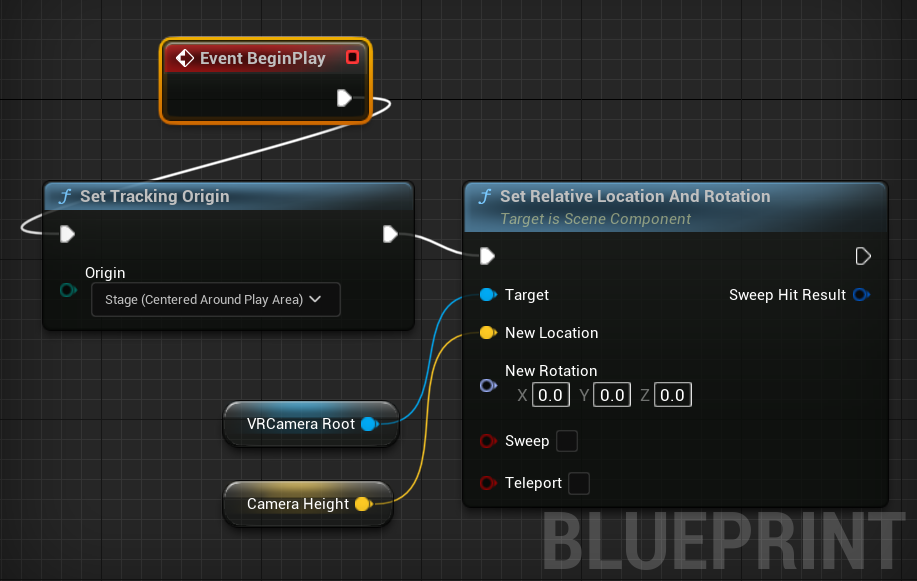
In AR 51 Blueprint, select "Oculus Quest" as the platform type
From the Details panel, under “General” you should see a field "Platform". Please select "Oculus Quest" 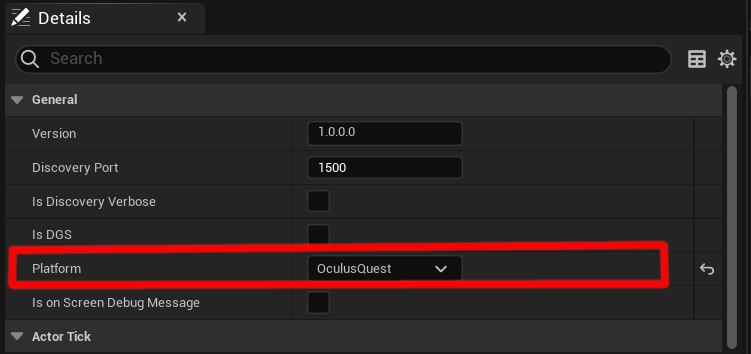
Make sure you have enabled Meta's Hand support
In the project settings under the Meta XR plugin section choose the following: 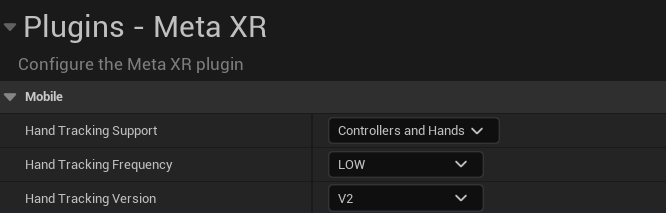 :
:
-
"Hand Tracking Support" should be "Controllers and Hands" or "Hands Only"
-
"Hand Tracking Version" works better with V2.
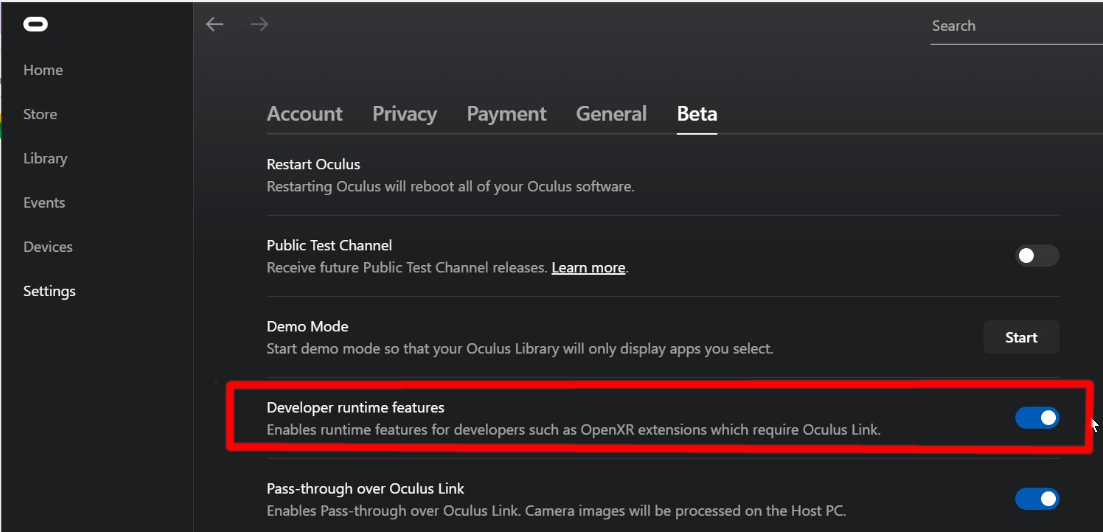
Be sure to enable "Developer runtime features" on the “Oculus PC app”
Without enabling this option you might not be able to move your hands on a tethered app and also in "VR preview" mode
Open the "Oculus" PC application.
Under Settings -> Beta, enable "Developer runtime features".
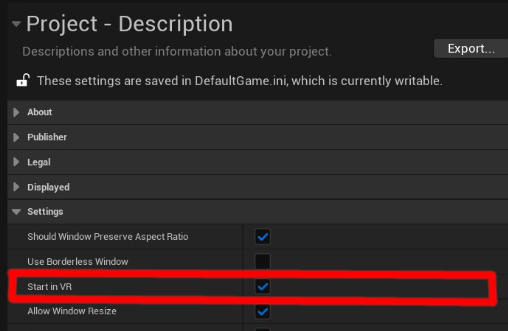
In a tethered deployment - enable "Start in VR"
Before deploying to a tethered application (PC VR app), be sure that you project is set to start in VR.
In Unreal-Engine, under "Project Settings" -> "Project Description" enable "Start in VR".
Hit Play
Make sure that AR 51's system is running on the same local network as your device.
You should see the character move in realtime 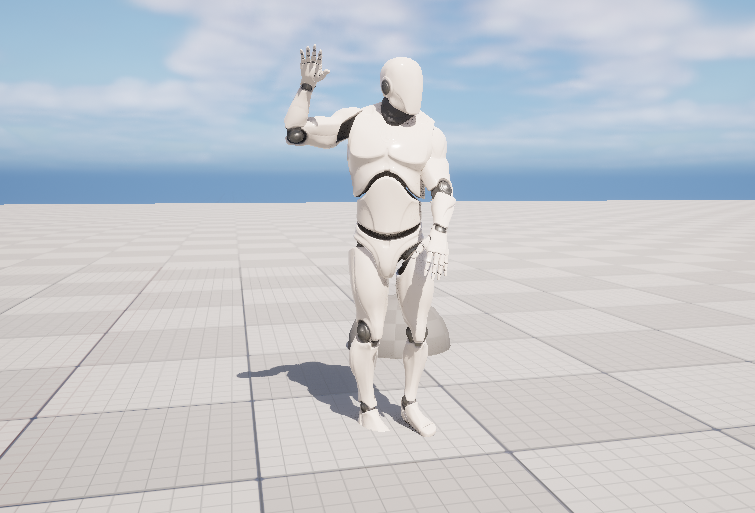 .
.
On your first run, perform device calibration
You should now perform device calibration so that the character would position on your body.